If you’re in the market for precision machining equipment, especially for turning parts, you’ve probably stumbled on two common terms: CNC lathes and lathes with live tooling. As someone who’s been selling CNC lathes for over a decade, I can’t tell you how many times I’ve fielded this exact question from shops that are expanding their capabilities, or from new machinists who’re just starting to navigate their options. The truth is, the difference isn’t just a line in a spec sheet—it’s a whole shift in what you can make, how fast you can make it, and how much work you save along the way. Let’s break this down plain and simple, no jargon overload, just the real-world differences you need to know to make the right choice for your shop. CNC Lathe
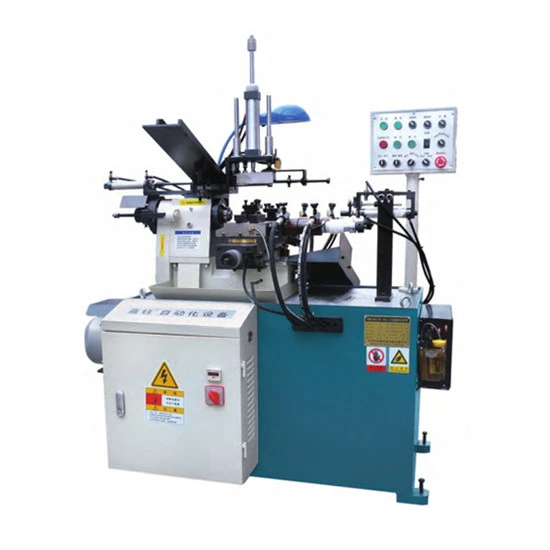
First, let’s start with the basics of a standard CNC lathe, because that’s what most people are familiar with. A traditional CNC lathe (sometimes called a “turning center” in the trade) is built for one primary operation: turning. When you use a standard lathe, you secure a workpiece in a chuck, and that chuck spins at a set speed while a cutting tool moves along two axes (X and Z, for anyone who’s ever stared at a machine control screen) to shape the outside or inside of the part. Think of making a threaded bolt, a simple cylindrical bushing, or a smooth axle—all of these jobs are bread and butter for a standard CNC lathe. The tooling here is static, meaning it doesn’t move on its own; it only moves along the axes the control commands, staying fixed in position relative to the spindle unless you swap out tools manually (or with an automatic tool changer, if you’ve got a more advanced model).
Now, what about a lathe with live tooling? If the standard lathe is a one-trick pony, this is the multi-tool of the turning world. Live tooling is exactly what it sounds like: cutting tools that “live” (spin) on the machine, powered by their own motors, not just the main spindle. That means instead of just turning parts, you can perform milling, drilling, tapping, even slotting or light broaching operations—all on the same machine, without ever taking the workpiece out of the chuck. For example, if you need a bolt that’s not just a smooth cylinder, but has a flat slot cut into the head, or a bushing with a cross-drilled hole, you can do that on a live tool lathe without moving the part. That’s a game-changer for shops that used to have to move a part from a lathe to a mill, which adds time, risk of error, and extra labor.
Let’s talk about the core design differences, because that’s where the real engineering separates these two machines. A standard CNC lathe’s turret (the part that holds cutting tools) is made to hold static turning tools. Each tool in the turret is locked in place, designed only to cut as the workpiece spins. The live tool lathe’s turret, on the other hand, has holes or pockets built specifically to hold live tools—each of these has a small motor inside the turret that spins the tool at variable speeds, independent of the main spindle’s rotation. That means when you’re turning the main part, the live tools can be held in reserve, and when you’re ready to mill or drill, you just index the turret to the live tool you need, set the speed and feed on the control, and go. The frame and rigidity of the two machines are also different: live tool lathes need to handle the extra forces from milling operations, so they’re often built with heavier castings and stiffer spindle assemblies to prevent vibration during non-turning cuts.
Now, let’s get into real-world use cases, because specs mean nothing if they don’t match what you actually make. If your work is exclusively turning parts—like automotive axle shafts, plumbing fittings, or simple cylindrical bushings that only need outer diameter (OD) and inner diameter (ID) turning, maybe threading and grooving—then a standard CNC lathe is the right call. It’s simpler, lower cost, more energy efficient, and faster for pure turning operations. A lot of our customers who specialize in small-parts manufacturing, like companies that make fasteners for appliances or agricultural equipment, swear by their standard CNC lathes because they’re optimized for those repeated, high-volume turning jobs. You don’t need extra motors or tooling capacity you’ll never use, so you save upfront costs and ongoing maintenance.
But if your parts require secondary operations beyond turning, a live tool lathe becomes indispensable. Let’s say you’re making a small medical component: a bone screw that needs a threaded shaft, a smooth head, and two small cross-drilled holes for suture anchors. On a standard lathe, you’d turn the shaft and head, then have to take the part out, chuck it into a mill, and drill those cross holes. That adds setup time, increases the chance of human error (like misaligning the part), and ties up two machines for one job. With a live tool lathe, you do all the turning and all the drilling in one setup, in one machine. Another example: a custom hydraulic fitting that needs a turned OD, threaded end, and a milled flat on the side for a wrench. Again, one setup, no part handling, less lead time. For shops that do a mix of turning and small milling, live tooling cuts out half the work.
Here’s where a lot of people get tripped up: are there limits to what a live tool lathe can do? Absolutely. It’s not a replacement for a full milling machine, obviously. Live tooling has a maximum speed and power, so you can’t run heavy, deep cuts like you would on a dedicated vertical mill. And the number of live tools is limited by the turret size—most entry-level live tool lathes have 6 to 12 live tool positions, while mid-range models have more, but even the biggest ones can’t match the tool capacity of a full machining center. But for secondary operations that fit on a turned workpiece? It’s more than enough for most shops’ needs.
Now, let’s talk about cost, because that’s a huge factor for most small to mid-sized shops. A standard CNC lathe is significantly less expensive than a comparable live tool lathe. The price difference comes from the extra motors, the reinforced turret, and the more complex control software needed to run both turning and live tool operations. If you’re a new shop with a tight budget, or a shop that exclusively runs simple turning jobs, a standard lathe is the smarter financial move. But if you’re growing and taking on jobs that require multiple operations, that extra cost pays for itself quickly in reduced setup time, less labor, and fewer parts that get damaged during secondary handling.
As a CNC lathe supplier, I’ve seen too many shops make the mistake of buying a live tool lathe before they actually need it, or buying a standard lathe when they’re about to take on new work that requires milling. I always tell customers to ask themselves two questions: 1) What’s the primary work I do 80% of the time? If that’s pure turning, stick with a standard lathe. 2) Do I anticipate needing secondary operations (drilling, milling, tapping) on more than 20% of my jobs in the next 2-3 years? If yes, start thinking about adding live tooling capacity.
Another point to consider is maintenance and training. A standard CNC lathe is simpler to maintain, with fewer moving parts and motors. If you have a small team that’s familiar with basic lathe operations, training them on a standard CNC lathe takes days, not weeks. Live tool lathes add more components to service—extra motors, live tool bearings, more complex control functions—so maintenance is a bit more involved, and training for operators is longer. But for many shops, the tradeoff is worth it for the efficiency gains.
Let me give you a real example from a customer of mine, a small job shop in Ohio that was only using standard CNC lathes for the first five years they were in business. They did a lot of small custom parts for local manufacturers, and every time a job required drilling or milling, they’d send it to a local mill shop, which added 2-3 days to lead times and 15-20% to their profit margin on those jobs. About two years ago, they upgraded to a mid-range live tool lathe, and within a year, they’d increased their revenue by 35% because they could take on jobs that required multiple operations without outsourcing, and they could complete those jobs in half the time. That’s the kind of return on investment you can’t get with a standard lathe when you’re growing.
Another customer, a manufacturer of precision fasteners for the aerospace industry, only uses standard CNC lathes. Their parts are 99% turning operations, with very light secondary tapping, which they do with the main spindle’s threading capability. They calculated that a live tool lathe would cost them an extra $80,000 upfront, and they’d barely use the live tool function, so the standard lathe was the far better choice for their specific needs. That’s exactly the kind of call I help customers make every day, walking through their workload, their current jobs, and their growth plans.
At the end of the day, there’s no “better” machine between a CNC lathe and a lathe with live tooling—it’s about what works for your operation. If you’re sticking to pure turning, high-volume jobs, low cost, and simplicity, go with a standard CNC lathe. If you’re looking to expand into jobs that require secondary operations, reduce lead times, and cut down on part handling, a live tool lathe is the way to go.
If you’re ready to talk through which option makes sense for your shop, I’m here to help. We work with shops of all sizes, from start-ups to mid-sized manufacturers, to match them with the right CNC lathes, whether that’s a standard model for high-volume turning or a live tool lathe to expand your capabilities. We don’t do one-size-fits-all, and we don’t push unnecessary upgrades. We’re all about making sure you get a machine that helps you make more parts, faster, and more profitably.
5 Axis Machining Center References
- Brown & Sharpe. (2021). Turning Center vs. Live Tool Lathe: A Machinist’s Guide. Precision Machining Journal.
- Machining Data Handbook. (2020). Volume 2: Turning and Related Operations. Society of Manufacturing Engineers.
- National Institute of Standards and Technology (NIST). (2019). Precision Lathe Technology for Small Batch Manufacturing. Manufacturing Extension Partnership Technical Report.
- Tooling U-SME. (2022). CNC Lathe Fundamentals: Standard vs. Live Tooling. Skill Development Module.
- Modern Machine Shop. (2021). Expanding Turning Capabilities With Live Tooling. Industry Best Practices Report.
Taizhou Qiyang Trading Co., Ltd.
As one of the most professional CNC lathe manufacturers and suppliers in China, we’re featured by quality products and good price. Please rest assured to buy bulk CNC lathe for sale here and get quotation from our factory. Customized orders are welcome.
Address: Zhenhai Village, Binhai Town, Wenling City, Taizhou City, Zhejiang Province
E-mail: qycncmachine@outlook.com
WebSite: https://www.qycncmachine.com/
