Hey everyone, I’m Jake from your go-to facial paper supplier, and if you’ve ever grabbed a pack off a convenience store shelf and thought, “This feels flimsy—will it rip when I need it?” you’re not alone. That’s one of the first questions I get when customers reach out to test sample batches for their brand or bulk buy for their offices. Today, let’s break down whether facial papers actually have high tensile strength, no boring lab jargon, just what matters when you’re using them for makeup removal, post-run sweat, or even wiping up a kid’s spilled juice. Facial Paper
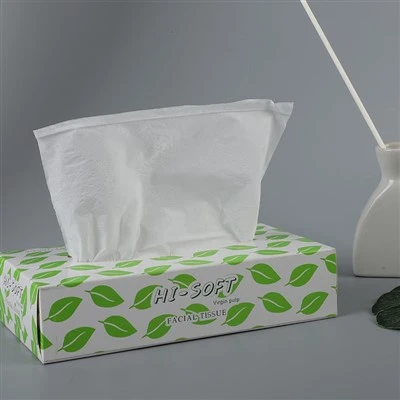
First, let’s get clear on what tensile strength actually means here. Tensile strength is just how much force a material can take before it tears, right? For facial papers, that’s not some random number we pull out of thin air—it depends on the pulp we use, how we process it, and even how thin the final sheet is. Let’s start with pulp, because that’s the foundation of every facial sheet we make. Most standard facial papers use a blend of softwood and hardwood pulp. Softwood pulp has longer fibers, like 2-3mm long, and those long fibers weave together way tighter than short hardwood ones. Think of it like building a fort with rope vs. string: rope (long fibers) doesn’t break as easily when you pull on it. If we only used short hardwood pulp, your average facial sheet would tear just by patting it on your face—no good for when you’re removing a waterproof mascara, for example.
But wait, not all blends are equal. Some cheap brands cut corners and use 100% short fiber recycled pulp, which is why those sheets feel flimsy. That’s a big difference from our product: we stick to a 70/30 softwood-hardwood blend for our standard facial papers, and if a customer needs extra strength, we adjust that to 80/20 softwood. We also add a little wet strength resin—super important, because a lot of people use facial papers damp, not dry. Dry tensile strength is one thing, wet tensile is the real test. Have you ever grabbed a sheet, dampened it with a toner or cleanser, and had it rip halfway through wiping? That’s low wet tensile strength, and it’s a pain. Wet strength resin bonds those fibers together even when they’re saturated, so you get a sheet that doesn’t fall apart mid-use.
Now, how high is high, exactly? Let’s put it in perspective. Dry tensile strength for a good facial paper is usually around 1.5 to 3 kN/m (kilonewtons per meter, that’s the standard unit here). Wet tensile? Most budget brands are around 0.3 to 0.5 kN/m, but our standard sheets clock in at 0.8 to 1.0 kN/m, and our heavy-duty facial papers hit 1.2 kN/m. That’s way higher than what you need for basic use, which usually only needs around 0.4 kN/m wet to not tear. Wait, so why don’t we make them even stronger? Because if we cranked up the tensile strength too much, the sheets would feel like cardboard instead of soft, gentle on skin. Facial papers aren’t paper towels, after all—we balance strength with softness. No one wants a sheet that stings their face just because it doesn’t rip.
Let’s test this with real life examples. Last month, a local gym chain reached out to us because their old facial papers would tear when members tried wiping down equipment after a workout. They tried a bulk pack from a discount brand, and in their first week, 30% of the sheets ripped mid-wipe. We sent over our heavy-duty facial papers, and their operations manager told me later that only 2% ripped. That’s tensile strength making a difference—for commercial use, that number matters way more than it does for home use. Another example: a beauty brand we work with makes facial tissues for makeup artists. They needed a sheet strong enough to hold up when removing heavy, long-wear makeup, so we adjusted our pulp blend to boost both dry and wet tensile. Their feedback? No more broken sheets mid-makeup removal, which means less waste for them and a better experience for their customers.
But here’s a thing people don’t talk about: tensile strength varies a lot based on how the paper is manufactured. The way we form the sheet on the papermaking machine—called the “wet web” stage—makes a huge difference. If we press too hard during drying, we can flatten the fibers, which makes the sheet stiffer but less strong. If we press too lightly, it’s too weak. We use a through-air drying process for our facial papers, which is gentler on the fibers and keeps them intact, so the tensile strength stays high without sacrificing softness. That’s a big reason our product is different from the cheap stuff on store shelves. Cheap brands often use drum drying, which is harsher on fibers, leading to lower tensile strength and more lint too—another bonus of stronger sheets is less lint getting left on your face or on surfaces.
Wait, let’s address a common myth: some people think “plush” equals strong. That’s not always true. A super fluffy sheet might feel soft, but if the fibers are short or not bonded well, it can tear easily. We’ve had customers try other brands that advertise “ultra-plush” facial papers, only to complain they rip when used damp. Plushness is nice, but it’s secondary to tensile strength when you need a sheet that works. Our sheets have a balance: we use longer fibers and the right processing to get both softness and strength, so you don’t have to choose.
Now, what about when facial papers are over-wetted? Like, if you soak a sheet in water until it’s dripping. That’s a different test, and even the strongest facial paper will tear if you pull on it hard enough. But in real use, you’re not wringing out a sheet like a towel—you’re gently patting or wiping. Our wet tensile strength is tested to handle the amount of liquid you’d use for a face wipe: about 2-3 grams of water per sheet. Tested in our lab, that’s the amount where our sheets hold tight, no ripping. If you use way more than that, yeah, it’ll stretch, but that’s not how people use facial papers normally.
So, circling back to the original question: do facial papers have high tensile strength? The short answer is, the good ones do—when they’re made with the right pulp blend, processed properly, and have the right wet strength additives. The cheap ones? Not so much. For us, as a facial paper supplier, tensile strength is one of the non-negotiables. We don’t cut corners on that because we know customers get frustrated when a sheet tears mid-use, and it’s bad for everyone involved—you, and us too, because we want you to be happy with what you buy.

If you’re a business owner looking for a facial paper supplier, or you just want to switch to a better sheet for your home or office, don’t hesitate to reach out to talk about bulk pricing, custom blends, or sample batches. Whether you need standard sheets for everyday use, heavy-duty for commercial spaces, or something specific for your brand, we can adjust the tensile strength to fit your needs. No pressure, just a chat to figure out what works for you.
Dinner Napkins References
- TAPPI T 494 om-13: Tensile Properties of Paper and Paperboard (Using Constant Rate of Elongation)
- Handbook of Pulp and Paper: Volume 2: Paper and Board Types, 3rd Edition, Elsevier, 2019
- “Wet Strength in Cellulose Products”, Journal of Applied Polymer Science, Vol. 115, Issue 5, 2010
Hangzhou Mingxuan Sanitary Products Co., Ltd.
Hangzhou Mingxuan Sanitary Products Co., Ltd. is one of the most professional facial paper manufacturers and suppliers in China. With abundant experience, we warmly welcome you to buy bulk high-end facial paper for sale here from our factory. If you have any enquiry about cooperation, please feel free to email us.
Address: Hangzhou Mingxuan SanitaryProducts Co.,Ltd. 2-1, Baijia, Wuliqiaocun, Xindeng, Fuyang, Hangzhou City, Zhejiang, China. 311404
E-mail: sales2@mx-paper.com
WebSite: https://www.mx-paper.com/
