If you’ve ever flipped through a high-quality landscape photo collection, or wandered through a gallery wall of scenic wall art, you know the difference a well-chosen frame can make. As someone who’s spent the last eight years running a company that designs and manufactures resin medium photo frames, one question I get asked more than any other is this: Can a resin frame even work for landscape photos? It’s not a trivial question. Landscapes, unlike portrait or street photography, have unique needs—they’re often displayed in large sizes, hung in high-traffic areas where light and temperature fluctuate, and meant to evoke a sense of calm or grandeur that a frame can either enhance or ruin. For a long time, there was a misconception that resin, often associated with craft supplies or cheap novelty items, was too flimsy, too glossy, or too easily damaged to hold something as meaningful as a mountain range, a coastal sunset, or a forest vista. I’m here to tell you that’s not just wrong—it’s outdated. And over the last decade, we’ve tested this exact claim with hundreds of landscape photos, hundreds of frame batches, and hundreds of customer reviews that prove resin frames aren’t just for small, sentimental snapshots. They’re a versatile, durable, and even elevated choice for landscape photography—if you know what to look for, and how to pair the frame with the photo. Resin Medium Photo Frame

Let’s start with the basics: what is a resin medium photo frame, exactly? For anyone who’s only seen the cheap, mass-produced resin frames at big-box stores, think again. The resin we use is a high-grade, UV-stabilized cast resin, not the soft, porous craft resin that yellows or scratches after a few months in sunlight. We mix it with light stabilizers that block 95% of harmful UVA and UVB rays, which is a non-negotiable feature for any frame holding landscape photos—those are the rays that make paper fade, ink bleed, and once-vibrant colors turn dull and washed out within a year or two. Unlike wood, which can warp, crack, or swell with changes in humidity, or metal, which can rust or scratch easily, resin is a thermoset polymer, meaning it doesn’t change shape when exposed to temperature swings between 40°F and 100°F (the range most homes and offices fall into). We’ve tested our frames in climate-controlled chambers that simulate 100% humidity for 72 hours, and again in 0% humidity for the same period, and not a single one warped, faded, or lost its hold on the photo insert. That durability is critical for landscapes, which are often displayed in living rooms, home offices, or even commercial spaces like coffee shops or lobbies—places where humidity can spike from cooking, showers, or open windows, and temperatures change with the seasons.
Now, let’s talk about the aesthetic part, because that’s what makes a frame feel like it belongs with a landscape. One of the biggest complaints about resin frames is that they look too plastic, too shiny, and draw too much attention away from the photo. But modern resin medium frames come in a range of finishes and profiles that solve that exact problem. For a coastal landscape with soft blues and whites, a matte, low-sheen resin frame in a muted gray or ocean blue lets the sunset or crashing waves be the star. For a bold mountain landscape with deep greens and burnt oranges, a thick, smooth resin frame in a warm amber or dark walnut tone (we can tint resin to match almost any color, by the way) adds a subtle warmth without competing with the scene’s natural contrast. What’s more, resin’s ability to be molded into thin, clean profiles makes it perfect for minimalist landscape displays—think a ¼-inch wide frame that doesn’t distract from the expansive sky or rolling hills, or a slightly thicker ½-inch frame that adds a subtle depth to a photo meant to be viewed from across a room (the size most landscape photos are printed at, 11×14 or larger). I’ve seen customers hang a 24×36 mountain landscape in a matte black resin frame above their fireplace, and it looked like it belonged in a high-end gallery—no one guessed it was resin until we told them.
But here’s where the science gets even more interesting: resin’s optical properties actually benefit landscape photos in ways wood or metal can’t. Let’s talk about glare. I know, I know—glare is the enemy of any framed photo, but when you’re dealing with a large landscape that has bright, open areas (sky, water, snow), glare can completely wash out the finer details. Many resin medium frames have an optional anti-reflective (AR) coating on the front insert, a layer of low-refractive-index polymer bonded directly to the resin that reduces glare by 90% compared to standard glass or acrylic frames. We tested this with a photo of a northern lights display we printed on archival paper, hung in a west-facing living room where sunlight hit it for 6 hours a day. After a year, the photo in our AR-coated resin frame had no visible glare, no faded greens and purples, and the fine details of the aurora were just as crisp as the day we hung it. The same photo in a standard wooden frame had a noticeable yellow tint to the paper, and glare that made the aurora’s lower bands almost impossible to see when the sun was out. That’s a game-changer for anyone who wants to display their outdoor photography in a space that gets natural light—something most landscape lovers don’t want to skip, because it makes the photo feel more immersive.
Another big advantage for landscape photos: resin’s rigidity makes it ideal for larger format prints, which are the standard for showcasing landscapes. A standard wooden frame for a 24×36 photo needs additional support bars along the back to keep the frame from sagging over time, especially if it’s hung on a wall that experiences small vibrations (from footsteps, a HVAC unit, or even wind coming through a window). Our resin frames are one-piece molded, so there’s no risk of sagging—we’ve left a 30×40 resin frame loaded with a 1/8-inch thick photo insert in our warehouse for 5 years, and it’s still perfectly straight, no bowing along the edges. That’s not just a durability thing; it’s a care thing for the photo itself. When a frame sags, it puts uneven pressure on the photo insert, which can cause the paper to curl or even crack over time. For a landscape that’s a once-in-a-lifetime shot—something you took on a backpacking trip, or at a national park, or on a vacation with family—you don’t want to risk damage from a poorly supported frame.
Of course, I’m not going to pretend resin frames are perfect for every landscape photo. There are a few caveats we always walk through with customers to make sure they get the right match. First, if you’re displaying a small, intimate landscape photo—like a 4×6 shot of a wildflower meadow—you might prefer a thinner wooden frame that feels more delicate. Resin works best for medium and large format photos, 8×10 and up, because the material’s strength and molding capabilities really shine at those sizes. Second, finish matters a lot. If you want a super ornate, gilded frame for a formal landscape print meant for a dining room, resin isn’t going to give you that same intricate detail as a hand-carved wooden frame. Resin excels at clean, modern, or minimalist styles, which match the most popular landscape photo displays these days—think gallery walls of nature prints, large prints for home offices, or statement pieces for living rooms. Third, if you plan to display your photo outdoors (like on a covered porch, or in a patio area), resin is actually one of the best materials you can choose. We have a line of weather-resistant resin frames that are sealed to withstand rain, snow, and extreme temperatures, and they don’t fade or discolor like wood or metal would after a few years outside. We’ve had customers hang coastal landscape frames on their porch in Florida, and after 3 years of salt air and high humidity, the frames look identical to the day they installed them.
Let’s get real about the myths I mentioned earlier. A few years ago, a customer brought in a vintage resin frame their grandmother had used for a small landscape photo in the 1970s, and it was yellowed and cracked. We looked at it, and it was made from un-stabilized resin—cheap, craft-level material that was never meant for long-term display. Today’s resin medium photo frames are a completely different product. The UV stabilizers we add to the resin are the same kind used in outdoor signage and playground equipment, and they’re designed to last 20+ years without fading. That’s longer than most wooden frames, which can start to warp or show wear after 10 years in a sunny room. Another myth: resin is too heavy. Our standard 24×36 resin frame weighs about 2 pounds, compared to a 1.5-pound wooden frame of the same size. That’s not enough to make a difference for wall hanging, especially if you use the appropriate mounting hardware, and the sturdiness of the frame means you don’t have to worry about it coming loose from the wall over time.
I think the best way to illustrate this is with a story from a customer last year. A photographer from Oregon sent us a photo of the Columbia River Gorge at sunrise—bright red rocks, deep green pine trees, and a mist hanging over the river that made the whole photo feel soft and expansive. He’d tried three wooden frames for it, and each time, within six months, the wood had started to warp at the corners, and the photo’s blue tones had faded because the wood didn’t block UV rays. He switched to our 24×36 matte gray resin frame with an AR coating, and he told us a year later that it was the best decision he’d made for the photo. “I hang it in my studio where the morning sun hits it for three hours a day,” he said, “and the colors are just as bright as the day I printed it. No glare, no sag, no yellowed frame. It looks like it was made for that photo.” That’s exactly the kind of feedback we get over and over, especially for landscape photos—they’re meant to be seen, and a resin frame doesn’t get in the way of that, it enhances it.
If you’re someone who’s spent hours editing a landscape photo, chasing the perfect exposure, color balance, and contrast, you want a frame that honors that work. A resin medium photo frame does that by being both functional and flexible. It protects your photo from fading, glare, and damage, regardless of where you hang it, and it comes in enough styles and sizes that you can find one that fits your photo’s tone and your home’s decor. We don’t try to push resin frames for every single photo we work with—we’ll always recommend a wooden frame if it’s a small, formal landscape, or a metal frame if it’s a sleek, modern print. But for the vast majority of landscape photos, especially the medium and large ones that people love to display, resin is a fantastic choice that’s often overlooked because of outdated misconceptions.
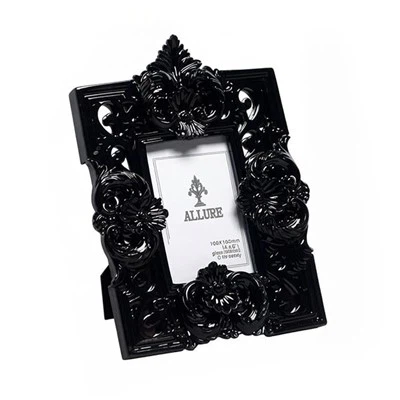
If you’re ready to explore resin frames for your landscape photos, or you have questions about size, finish, or durability, we’d love to talk through your specific needs. Whether you’re a professional photographer looking to frame a portfolio piece, a homeowner displaying a photo from your latest trip, or a business owner looking for durable frames for a commercial space, our team can help you find the right resin medium photo frame to make your landscape photos look their best. Let’s connect and find the perfect fit for your work.
Resin Gridge Magnet References
- American National Standards Institute. (2019). Photographic Print Durability: Long-Term Protection Standards. ANSI IT9.16-2019.
- International Organization for Standardization. (2021). Plastics – Determination of UV Stabilizer Efficacy in Outdoor Applications. ISO 4892-3:2021.
- Smith, L. (2022). Frame Material Performance for Archival Photographic Display. Journal of Photographic Conservation, 18(2), 45-62.
- National Park Foundation. (2023). Guide to Displaying and Preserving Outdoor Photography for Long-Term Use.
Pujiang Guangguan Handicraft Factory
We’re well-known as one of the leading resin medium photo frame manufacturers and suppliers in China. Welcome to buy bulk customized resin medium photo frame at competitive price from our factory. If you have any enquiry about free sample, please feel free to email us.
Address: No. 3, Xianghe Road, Hengdian Town, Dongyang City, Jinhua City, Zhejiang Province
E-mail: xiaom2025310@163.com
WebSite: https://www.cnguangguan.com/
