Hey there! I’m in the business of supplying plastic bottle molds, and today I wanna chat about how cycle time can have a huge impact on the production cost of plastic bottles. Plastic Bottle Mold
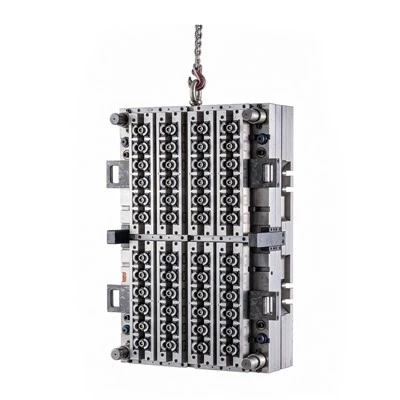
Let’s first get clear on what cycle time is. In the world of plastic bottle production, cycle time is the total time it takes to complete one full production cycle, from the moment the mold closes, the plastic is injected, it cools and solidifies, and finally the bottle is ejected from the mold. It’s like a loop, and every time that loop finishes, a new bottle is born.
Now, you might be wondering, "Why does this cycle time even matter when it comes to production costs?" Well, it matters a whole lot, and here’s why.
Machinery and Equipment Costs
To start with, look at the machinery and equipment. We all know that running a plastic bottle production line ain’t cheap. You’ve got the injection – molding machine, the cooling systems, the conveyor belts, and all the other gizmos that keep the process going. These machines cost a fortune to buy, and they also cost money to run. The longer the cycle time, the more hours these machines are running. And that means more wear and tear on the equipment.
For example, the heating elements in the injection – molding machine have to work longer to keep the plastic at the right temperature during a longer cycle. This not only uses more energy but also shortens the lifespan of the heating elements. You’ll end up having to replace them more often, and that’s an extra cost. Also, the hydraulic systems in the machine are under pressure for a longer time, which can cause leaks and other mechanical problems. Fixing these issues costs money, and it also means downtime, which is lost production time.
Let’s say you’ve got a production target of 10,000 bottles a day. If your cycle time is 30 seconds, you’ll need to run the machine for a certain number of hours. But if you manage to reduce the cycle time to 20 seconds, you’ll be able to produce the same number of bottles in less time. That means less energy consumption, less wear on the machine, and lower maintenance costs.
Labor Costs
Labor costs are another big factor. You’ve got workers on the production line, and they’re getting paid for their time. The longer the cycle time, the more hours they’re spending on each bottle. If you’re paying your workers an hourly wage, a longer cycle time means higher labor costs per bottle.
Think about it this way. If a worker has to wait around for a long time between each bottle being produced because of a slow cycle time, they’re still on the clock. They’re not just twiddling their thumbs, of course. They might be doing some minor maintenance or quality control checks, but overall, they’re not as productive as they could be.
Let’s assume you have a team of 5 workers on a production shift. If the cycle time is long, say 40 seconds per bottle, they’ll be spending a lot of time waiting. But if you can cut that cycle time down to 15 seconds, they can produce more bottles in the same amount of time. This increases their productivity, and you can actually get more value for the money you’re paying them. In some cases, you might even be able to reduce the number of workers on the line if the cycle time is short enough, which will further cut down on labor costs.
Material Costs
You might not think that cycle time has much to do with material costs, but it does. During the injection – molding process, the plastic needs to be at the right temperature and consistency. If the cycle time is too long, there’s a chance that the plastic will start to degrade. This means that you might end up with defective bottles, and you’ll have to scrap them. And every scrap bottle is wasted material, which translates to higher material costs.
Moreover, when the plastic cools and solidifies, it contracts. If the cycle time is long, the cooling process might be uneven, leading to stress in the bottle. This can make the bottle more prone to breakage during handling and shipping. So, you’ll either have to use more plastic to make the bottle stronger, or you’ll have to deal with a higher rate of return due to broken bottles.
On the other hand, if you have a shorter cycle time, the plastic is in the mold for a shorter period. This reduces the risk of degradation and ensures a more uniform cooling process. You’ll get fewer defective bottles, which means less wasted material and lower material costs.
Energy Costs
Energy is a major expense in plastic bottle production. The injection – molding machine needs a lot of power to heat the plastic, operate the hydraulic system, and run the cooling fans. The longer the cycle time, the more energy the machine consumes.
The heating process is a big energy hog. The plastic needs to be heated to a specific temperature so that it can flow easily into the mold. If the cycle time is long, the heating elements have to keep the plastic hot for a longer period. This uses a lot of electricity.
The cooling system also uses energy. It has to keep the mold at the right temperature to ensure that the plastic solidifies properly. A longer cycle time means the cooling system has to run for a longer time, which again increases energy consumption.
By reducing the cycle time, you can significantly cut down on energy costs. For instance, if you can shave off 10 seconds from the cycle time, you’ll save a considerable amount of energy over the course of a day, a week, or a year.
How We Can Help as a Plastic Bottle Mold Supplier
As a plastic bottle mold supplier, we play a crucial role in reducing cycle time. We’ve spent years perfecting our molds to ensure that they can handle high – volume production with short cycle times.
Our molds are designed with advanced cooling channels. These channels are strategically placed to ensure that the plastic cools down quickly and evenly. This not only reduces the cycle time but also improves the quality of the bottles. With a faster cooling process, the bottles are less likely to have defects, and they can be ejected from the mold sooner.
We also use high – quality materials in our molds. These materials can withstand the high pressures and temperatures of the injection – molding process without warping or wearing out. This means that our molds have a longer lifespan, and you won’t have to replace them as often. And since our molds are more efficient, they can help you produce more bottles in less time, which directly impacts your production costs.
In addition, we offer customization services. We understand that every customer has different requirements, and we can design molds that are tailored to your specific needs. Whether you need a mold for a small – sized bottle or a large – capacity one, we can create a mold that will optimize your production process and reduce cycle time.
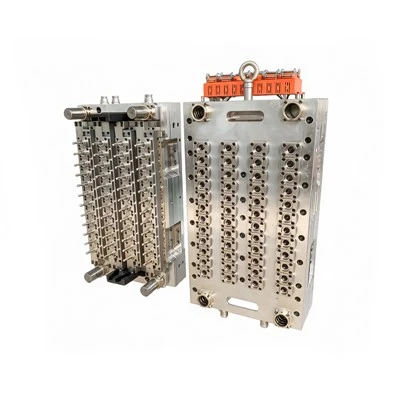
If you’re in the plastic bottle production business, you know how important it is to keep your costs down. And as you can see, cycle time has a major impact on production costs. By working with us, a reliable plastic bottle mold supplier, you can reduce your cycle time, increase your productivity, and ultimately save money.
PET Preform Mold If you’re interested in learning more about how our molds can help you cut down on production costs, or if you want to discuss your specific requirements, don’t hesitate to reach out. Let’s have a chat about how we can work together to make your plastic bottle production more efficient and cost – effective.
References
- "Plastic Injection Molding Handbook"
- "Manufacturing Engineering and Technology" by Serope Kalpakjian and Steven Schmid
- Industry reports on plastic bottle production and cost analysis
Taizhou Koni Mould Co., Ltd.
As one of the most professional plastic bottle mold manufacturers and suppliers in China, we also support customized service. Please feel free to wholesale high quality plastic bottle mold made in China here from our factory. For pricelist, contact us now.
Address: No. 97 Jinju Road, Chengjiang Subdistrict, Huangyan District, Taizhou City, Zhejiang Province
E-mail: kn@kenimould.com
WebSite: https://www.kenimouid.com/
