If you’ve ever stood at the kitchen sink, watching your reverse osmosis (RO) system drip clean water into a storage tank, you might’ve wondered: this technology is amazing for making tap or well water safe to drink—could it work for wastewater too? As an RO water systems supplier, I get this question all the time, and it’s not just a casual thought. Wastewater purification is one of the most pressing environmental challenges of our time, from shrinking freshwater supplies to growing concerns about microplastics, pharmaceuticals, and industrial contaminants leaking back into our rivers and aquifers. Over the past decade, I’ve watched our RO technology evolve from a luxury home appliance to a workhorse for some of the world’s largest wastewater treatment projects—and today, I want to break down exactly how it works, what it can and can’t do, and why it’s not just a “nice-to-have” for wastewater, but often the best tool for the job. Reverse Osmosis (RO) Water Systems

First, let’s ground this in what reverse osmosis actually is, because there’s a lot of misinformation out there. When people hear “reverse osmosis,” they usually think of the process that desalinates seawater, which makes sense: desalination is one of the largest-scale uses of RO today. But the core principle is the same whether you’re working with saltwater or wastewater: osmosis is the natural process where water moves from an area of low solute concentration to high solute concentration across a semipermeable membrane. For desalination, you apply pressure to the saltwater side to push water against that natural flow, leaving salt and other contaminants behind on the other side. For wastewater, it’s the same pressure-driven barrier, just with a different set of contaminants to filter out.
Let’s talk about what kind of wastewater we’re even referring to here, because that matters a lot. Wastewater covers a huge range: there’s domestic municipal wastewater (what comes out of your shower, toilet, and sink after you use it), industrial wastewater from factories, agriculture runoff, even “produced water” from oil and gas operations that’s full of heavy metals and chemicals. Each type has its own mix of contaminants, and not all of them can be removed by RO alone—but that’s where the real innovation lies, and where our team at the RO supplier level has learned to pair RO with pre-treatment steps to make it work for almost any wastewater stream.
Take municipal wastewater, for example. Most cities around the world already treat wastewater before releasing it back into rivers: traditional primary and secondary treatment removes big solids, organic waste, and pathogens, but what’s left is tertiary wastewater, often called “effluent.” That effluent still has microplastics, prescription drugs (like antibiotics, antidepressants), hormones from birth control, and other tiny dissolved chemicals that standard secondary treatment can’t touch. A lot of people call this “gray water” when it’s slightly treated, but it’s still not safe to drink. RO can filter almost all of those contaminants. I’ve worked with cities in California and Australia that have installed full-scale RO systems on their tertiary effluent to make what’s called “purified recycled water” — and in some cases, that water is even cleaner than the drinking water coming out of their regular tap pipes, because it has fewer impurities. The Orange County Water District’s Groundwater Replenishment System, for example, processes 100 million gallons of wastewater a day through a combination of microfiltration, reverse osmosis, and ultraviolet light with hydrogen peroxide, turning sewage into water that goes back into the local aquifer to be used as drinking water decades later. That’s not science fiction—that’s a real, working project we’ve supported parts of, from membrane supply to system design.
But here’s the catch: RO doesn’t work on every wastewater stream without some prep. Let’s say you’re dealing with heavy industrial wastewater from a textile factory, which has dyes, suspended solids, and high levels of salt. If you just pump that straight into an RO system, those big dye molecules and suspended solids will clog the RO membranes in days, not years, making them useless and wasting tens of thousands of dollars in replacement parts. That’s why we always emphasize pre-treatment when we’re talking about wastewater applications. Pre-treatment might include things like microfiltration (to catch large particles and bacteria), ultrafiltration, even chemical addition to adjust the pH of the wastewater so it doesn’t scale or corrode the RO membranes. For example, when we worked with a food and beverage plant that was discharging wastewater high in sugar and organic compounds, we installed a pre-treatment system that uses activated carbon to remove residual food particles, then ran the stream through our RO systems to recover 92% of the water—enough that they now reuse 80% of their process water on-site, cutting their municipal water bills by 60%. That’s the kind of win that makes both our clients and the environment happy.
Another common question I get: can RO remove all contaminants from wastewater? The short answer is no, but that’s not a flaw in the technology—it’s just how it works. RO membranes have a pore size of about 0.0001 microns, which is small enough to block 99% of dissolved salts, heavy metals, microplastics, pathogens, and most organic chemicals. But there are a couple of exceptions. Very small molecules like some volatile organic compounds (VOCs) — think things like chloroform or benzene — can sometimes pass through RO membranes, especially if the membrane is old or not properly maintained. Other contaminants, like certain bacteria that are smaller than membrane pores (wait, no—actually, most bacteria are 0.2 microns, way bigger than RO pores), or viruses, which are around 0.02 microns, are almost always filtered out, but we still recommend post-treatment steps like UV disinfection to make the final water even safer. For a lot of wastewater applications, though, those rare VOCs are the only gap, and they’re easy to address with a carbon filter after RO.
I also want to talk about the efficiency of RO systems for wastewater, because that’s a big concern for plant operators and sustainability teams. Fifteen years ago, a standard RO system would only recover about 50% of the water it processed—meaning half the wastewater would get pushed out as “concentrate,” a briny stream full of all the contaminants that the RO filtered out. That concentrate was often just sent back to rivers or injected into wells, which created its own environmental problem. But modern RO technology, the kind we design and supply now, has energy recovery systems that capture the pressure from the concentrate stream and use it to push new wastewater through the membranes. The latest systems can recover up to 95% of the water, depending on the quality of the influent. That’s a game-changer: not only are you cleaning more water, you’re cutting energy use by 30-40% compared to older RO setups, and producing way less concentrate that needs to be disposed of. We recently upgraded a system at a semiconductor plant that was using 1.2 million gallons of water a month for manufacturing, and after our RO upgrade with energy recovery, they now only discharge 50,000 gallons of concentrate a month—most of which we even helped them process further to remove heavy metals, making it safe to discharge.
But I’d be remiss if I didn’t talk about the challenges, because this isn’t a silver bullet. Cost is the biggest one upfront. A full-scale RO wastewater system costs more to install than traditional treatment, especially for small municipalities or businesses with limited budgets. That’s why we often work with clients on phased installations: start with a smaller pre-treatment and RO system to test the water quality, then expand as they see the savings from water reuse. Maintenance is another factor: RO membranes need to be cleaned every few months with specialized solutions to prevent biofilm growth, and they need to be replaced every 5-10 years, which adds to the operating cost. But when you compare that to the cost of buying new water from municipal supplies, or the fines for discharging contaminated wastewater, it often pays for itself in 2-3 years.
There’s also the public perception angle. A lot of people still call recycled water “toilet to tap” as a pejorative, even though it’s some of the cleanest water available. I’ve had homeowners ask me why I would use RO on wastewater when I sell systems for drinking water—they don’t realize that the purified water coming from our wastewater RO projects is often tested stricter than municipal tap water, and doesn’t have the chlorine byproducts or lead that can leach from old pipes. As an RO supplier, we do a lot of education work, going to community meetings, showing lab test results, and explaining how the system works to break down that stigma. That’s just as important as the technology itself.
Now, let’s get to the real-world examples that make this matter, beyond the technical stuff. Last year, we partnered with a city in Arizona that was facing a 20-year drought and needed to find a new water source. Their previous wastewater treatment plant was discharging 5 million gallons a day into a local wash that fed into the Colorado River—their only source of drinking water. We designed and supplied a RO-based system that takes that tertiary wastewater, runs it through microfiltration, two stages of RO, and UV disinfection, turning it into 4.2 million gallons a day of clean water that’s added to the city’s aquifer. That single project gives the city enough water for 12,000 households, and it’s reduced their reliance on the Colorado River by 10%. It’s not a magic fix for the West’s water crisis, but it’s a big step.
Another example: agricultural wastewater. Farms use millions of gallons of water a year for irrigation, and a lot of that water runs off with fertilizers and pesticides, polluting rivers and groundwater. We’ve installed RO systems on 12 different vegetable farms in Central California that process their runoff water, remove pesticides and nitrates, and reuse 85% of the water for irrigation. One of our clients, a 2,000-acre produce farm, told us that before our system, they were spending $120,000 a year on water from the district, and another $40,000 on fines for runoff violations. Now, they’re almost completely water independent, and they pay less than $10,000 a year in operating costs for the RO system. That’s the kind of impact that makes all the engineering work worth it.
So, circling back to the original question: can reverse osmosis water systems be used to purify wastewater? The answer is a resounding yes—but with a few key caveats. It’s not a standalone solution for every type of wastewater, especially high-solids industrial streams without proper pre-treatment, but when paired with pre-treatment and post-treatment steps, it’s one of the most effective, versatile tools we have for turning wastewater into a usable, clean resource. It’s also evolving fast: we’re working on RO membranes that can filter out even smaller molecules, like microplastics down to the nanoscale, and new energy recovery systems that cut costs even more.
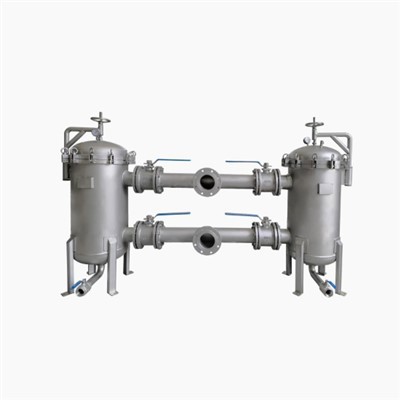
If you’re a municipal manager, a plant operator, or a business owner looking to reduce your water footprint, lower your costs, and do right by the environment, an RO-based wastewater purification system might be the right fit for you. We’ve designed and supplied systems for small local businesses and large municipal projects across the country, and we work closely with every client to assess their specific wastewater stream, design a custom system that meets their budget and needs, and provide ongoing maintenance and support. Whether you’re looking to reuse process water, reduce discharge, or create a new source of clean water, we can help you navigate the technical details, address cost concerns, and build a system that delivers long-term results. To learn more about how RO can work for your wastewater needs and discuss a custom plan, reach out to our team to connect for a purchasing consultation.
Sewage Treatment Plant References
- American Water Works Association. (2021). Water Recycling and Reuse: Technologies, Applications, and Policies.
- Orange County Water District. (2022). Groundwater Replenishment System 10-Year Performance Report.
- U.S. Environmental Protection Agency. (2020). Reverse Osmosis for Wastewater Reuse and Treatment.
- World Health Organization. (2019). Guidelines for the Safe Use of Wastewater, Excreta and Greywater, Volume 4: Wastewater Use in Non-Agriculture.
- International Desalination Association. (2023). Global Status of Desalination and Water Reuse Report.
Shandong Lingke Environmental Technology Co., Ltd.
Address: 100 Meters South of the Intersection of County Road 042 and National Highway 309, Changle County, Weifang City, Shandong Province
E-mail: aileenlin@sdlingkegroup.com
WebSite: https://www.lkecotech.com/
