If you’ve ever wandered around a metal fabrication shop, a glass processing facility, or a auto parts finishing bay, you’ve probably stared at a big, loud grinding and polishing line and thought “how do they get those parts so smooth, so fast?” Sure, there are conveyors moving pieces along, there are those big abrasive belts or polishing pads spinning, but if you ask anyone who’s actually run one of these lines, they’ll tell you the secret isn’t just the belts or the motors—it’s the polishing head. As someone who’s been selling and fine-tuning these lines for the last 12 years, I see way too many people sleep on this part, and it’s the number one reason new lines underperform. Grinding and Polishing Lines
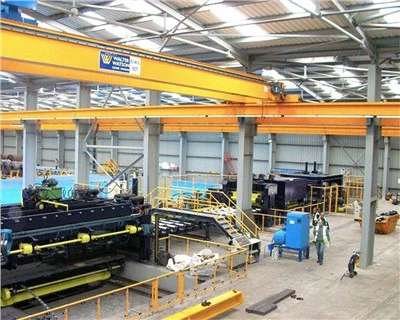
Let’s start with what a lot of folks get wrong: a polishing head isn’t just a spinning disk stuck on a shaft. It’s a precision tool that sits right between the line’s power source, its abrasive or polishing media, and the part it’s finishing. And depending on what you’re grinding or polishing—let’s say you’re buffing a batch of stainless steel sink bowls, sanding rough cast aluminum engine blocks, or getting glass ready for a coating line—what that head is made of, how it moves, and how it applies pressure can make or break your entire process.
I can’t tell you how many times a customer has come to me saying their line is taking twice as long as it should, or they’re leaving scratch marks on parts no matter how many times they replace their belts. Nine times out of ten, the problem is their old polishing head. I remember a plant in Chicago that makes commercial stainless steel food trays—they were using a generic, one-size-fits-all polishing head for everything, and they were wasting 15 hours a week reworking parts because their finish was inconsistent. Once we swapped out their heads for ones calibrated specifically for tray curvature (soft enough to conform to the rounded edges, firm enough to take off weld slag), their rework dropped by 80% and their line output jumped by 22%. That’s not a small win for a shop running two shifts a day.
So let’s break down the core jobs a polishing head does in a grinding and polishing line, no jargon promised. First, it transfers power smoothly from the line’s motor to the abrasive media (that could be a belt, a flap disc, a polishing pad, even a felt wheel) without wobbling or jumping. Wobble is the enemy here—if your head spins unevenly, you’re going to get uneven pressure on your part, which means you’ll have rough spots where the head didn’t press hard enough and deep scratches where it jumped. A good polishing head has balanced bearings and a rigid shaft that keeps every inch of the media moving at the exact same speed, every single time. That’s basic, but you’d be shocked how many low-end lines skip this and end up with part finishes that look like they were done by an amateur.
Second, and this is the part most manufacturers cut corners on, a polishing head controls contact pressure. Here’s the thing: grinding and polishing isn’t just about abrasion—too much pressure will wear out your media in half the time, it can even deform soft parts like thin aluminum or plastic, and it creates excess heat that ruins the finish. Too little pressure, and you’re just buffing away with no material removal, wasting time and electricity. The best polishing heads we build have adjustable pressure settings, some even have built-in sensors that tweak pressure automatically based on the part’s shape. For example, when a part goes from a flat surface to a curved edge, the head doesn’t have to stay at 10 pounds of pressure—it can adjust to 7 pounds on the curve and 10 pounds on the flat, which keeps the finish consistent across the whole part. That’s the kind of precision that separates a good line from a great line.
Third, and this is super important for high-volume lines, a good polishing head is modular. No one wants to shut down an entire line just to replace a worn out part of the head, right? Our heads are built so if the polishing pad or belt attachment wears out, you can swap that section in 2 minutes flat, no tools required sometimes. I worked with a customer in Ohio that makes lawnmower blades—they run their line 18 hours a day, 6 days a week, and downtime costs them $2,000 an hour. When we switched them to modular heads, their line only went down 15 minutes a week instead of 2 hours, and that one change paid for the new line in 3 months. It’s small stuff, but it adds up fast.
Now, let’s talk about the different types of polishing heads, because not all lines need the same one. If you’re running a line for flat parts—like metal sheets, glass panels, or tabletops—you want a rigid, flat-faced polishing head that can lay evenly across the entire surface. These heads are usually paired with wide abrasive belts or non-woven pads, and they’re designed to maintain perfect parallel contact with the conveyor. If you’re working with contoured or 3D parts, like cookware, tool handles, or automotive trim, you need a compliant or articulating polishing head. These have flexible segments or ball joints that let them bend to follow the part’s shape, so you don’t get spots where the edge of the part isn’t getting polished at all. We even have custom heads for parts with really tight curves, like rifle receivers, that have tiny individual segments that move independently so every edge gets equal treatment.
Wait, let’s also address a common myth I hear all the time: “bigger polishing heads are better.” No, that’s not true. A head that’s too big for your part will waste media because you’re dragging the edges of the head over areas that don’t need to be polished, and it can cause the part to shift on the conveyor. A head that’s too small means you’re moving the part back and forth under the head to get full coverage, which slows down your line and can cause scratches from repeated contact. The sweet spot is matching the head diameter and shape to the part size and your line’s speed. For small parts, we use heads as small as 2 inches; for large panels, we use heads up to 2 feet wide. It’s all about the fit.
Also, let’s not forget about maintenance—yes, the polishing head needs care too, just like the rest of the line. A lot of customers think “if it spins, it works,” but if you don’t clean the head regularly, abrasive dust and metal shavings build up between the shaft and the bearings, which makes the head wobble over time. We include a maintenance schedule with every line we sell, and we teach operators to check the head balance every month. Last year, we had a customer in Texas who skipped that maintenance for 8 months—by the time they called us, their head was so unbalanced, it was wearing out their belts 3x faster than normal. A 10-minute balance check fixed that, no new parts needed.
Here’s where I tie this back to my job as a line supplier. I don’t just sell a line that has a random polishing head bolted on. I work with each customer to figure out exactly what parts they’re running, what finish they need (is it a rough grind for machining, a satin finish, a mirror polish?), and their line’s production speed, then I spec the right heads for their needs. I’ve turned down more than a few jobs where a customer wanted to go with a super cheap line with cheap heads, because I knew they’d end up calling us a few months later to fix the mess. It’s not just about making a sale—it’s about keeping a customer.
I also want to mention how polishing heads are evolving, because if you’re in this industry, you can’t stay stuck in old tech. Modern polishing heads have pressure sensors, vibration monitors, even data tracking that lets you log how each head is performing, when it needs maintenance, and when it’s time to replace the media. That’s a game-changer for quality control. For example, if a head’s vibration spikes, the system automatically alerts the operator before the head gets so bad it ruins a batch of parts. That’s the kind of tech small shops used to not afford, but now we build it into our lines at a price that makes sense.
Let’s wrap this up, because I know you’re probably thinking “alright, I get that the polishing head is important, what does this mean for my shop?” If your current grinding and polishing line isn’t meeting your quality targets, is wasting too much media, or has too much downtime, don’t just upgrade your belts or your motors. Take a hard look at your polishing heads. They’re the workhorses of the line, the part that makes everything else work right, and skimping on them is the fastest way to lose money.

If you’re ready to stop fighting with inconsistent finishes, too much rework, and unnecessary downtime, let’s chat. I can walk you through what kind of polishing heads would work best for your parts, even send you a free quote for a line tailored to your needs. No sales pitch pressure, no confusing jargon, just real advice from someone who’s been in this field for years.
Cut To Length Line References
- Tönshoff, H. K., et al. "Grinding and Polishing of Metals." Annals of the CIRP, vol. 43, no. 2, 1994, pp. 511–525.
- Byrne, G., et al. "Recent Advances in Grinding Technology." CIRP Annals – Manufacturing Technology, vol. 55, no. 2, 2006, pp. 671–692.
- American Society for Metalworking and Materials. Polishing and Finishing: Principles and Applications. ASM International, 2013.
- Kalpakjian, S., and S. R. Schmid. Manufacturing Processes for Engineering Materials. Pearson, 2019.
Shanghai HOYO Industries Co., Ltd.
Shanghai HOYO Industries Co., Ltd. is one of the most professional grinding and polishing lines manufacturers and suppliers in China, featured by quality products and competitive price. Please rest assured to buy cheap grinding and polishing lines for sale here from our factory. Contact us for customized service.
Address: No.8, Jianding Road, Fengjing Town, Jinshan District, Shanghai, China
E-mail: info@hoyomachinery.com
WebSite: https://www.hoyomachinery.com/
